OpenSuperQPlus Holds Final Project Meeting in Gothenburg Ahead of SQA 2026
From 24 to 28 August 2026, the OpenSuperQPlus consortium met at Chalmers University of Technology in Gothenburg for its final two-day project meeting and the subsequent SQA conference. The project meeting provided a valuable opportunity to review the tasks for the remaining six months of the project and to discuss how these results could be successfully sustained in the long term. The subsequent Superconducting Qubits and Algorithms Conference (SQA, 25-28 August) offered further occasions to engage with scientists and industry representatives from outside the consortium.
Consortium Meeting with Focus on the Long-Term Sustainability of OpenSuperQPlus
Following welcoming remarks by Maria Messing, Head of the Department of Microtechnology and Nanoscience at Chalmers University of Technology, and Göran Johansson, Director of the Wallenberg Centre for Quantum Technology, consortium members updated each other on the current status of research and outstanding activities in the individual work packages. The event continued with a plenary session that focussed on the considerable progress made in further developing quantum demonstrators at Chalmers University of Technology, TU Delft and the Walther Meissner Institute.
In addition to the technological innovations emerging from OpenSuperQPlus, the project meeting once again highlighted the consortium’s interest in the ethical and educational angles of quantum computing. Two talks addressed the importance of quantum computing in school education and implications of increased use of artificial intelligence, presented by András Pályi (BME), and the ethical implications around defining access toquantum computers, presented by Pieter Vermaas (TU Delft). The presentations discussed two policy briefs that will be published in the coming months.
The meeting concluded with an open discussion on how to safeguard and ensure sustainability of the project results, as well as on how to contribute to current political initiatives such as the European Quantum Act.
SQA 2026: At the Forefront of European Quantum Computing
The exchange initiated during the project meeting continued at the SQA conference from 25 August onwards. The consortium was strongly represented on the conference’s scientific committee by coordinator Frank Wilhelm-Mauch (Forschungszentrum Jülich), as well as by Stefan Filipp (Walther-Meissner Institute) and Mikko Möttönen (Aalto University). In addition, conference attendees could learn more about OpenSuperQPlus at the project’s information booth.
Multiple papers involving consortium members from the Walther Meissner Institute, Chalmers University of Technology and Forschungszentrum Jülich were presented during the conference sessions. In particular, the team among Anton Frisk Kockum (Chalmers University of Technology) was strongly represented with papers on Josephson junctions, multi-qubit interactions and parametric two-qubit gates.
The five days spent together in Gothenburg once again demonstrated the importance of transnational European collaboration in quantum computing. A strong and well-connected European community will be essential for Europe to succeed in the global competition in this field.
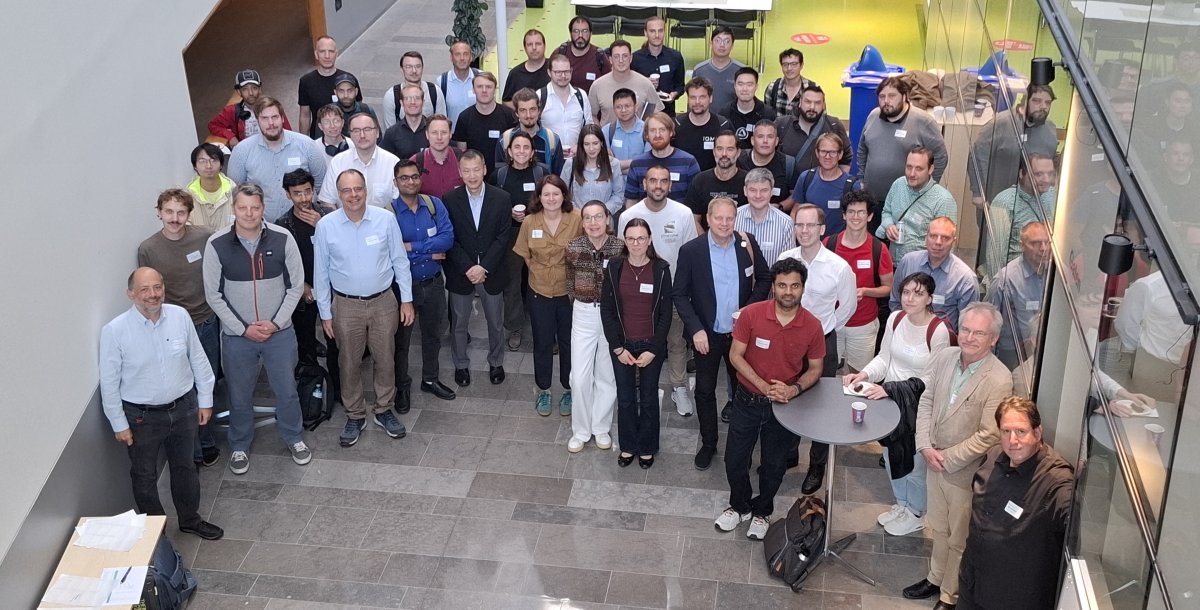
Group photo at Chalmers University of Technology
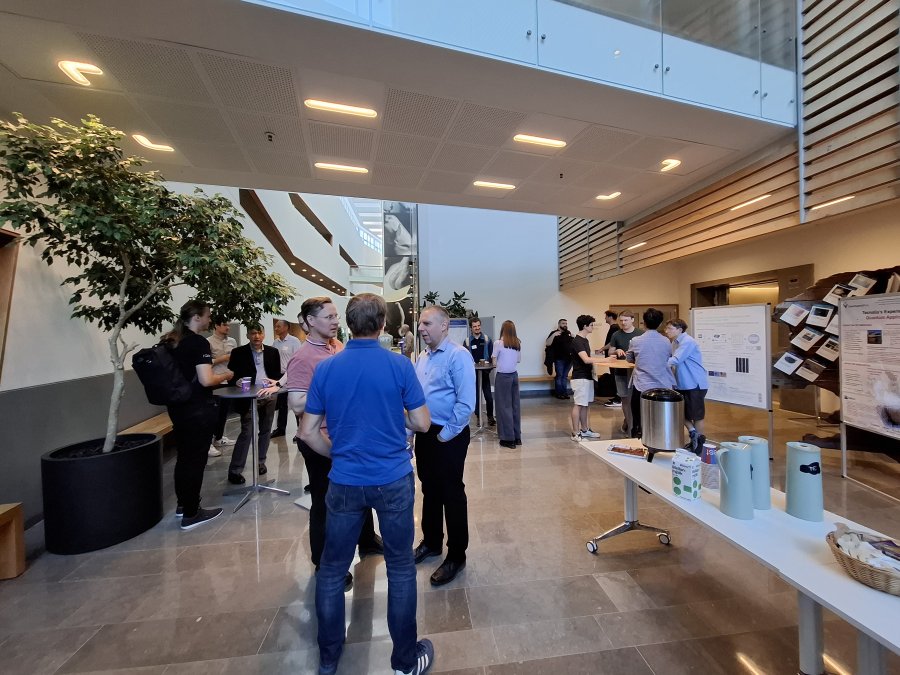
Coffee break
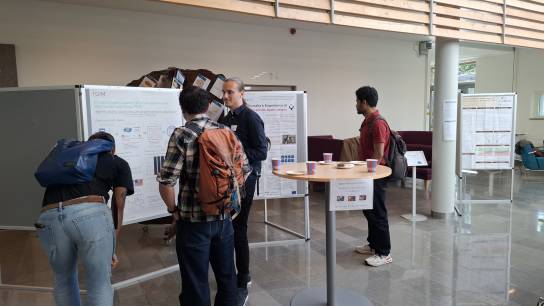
Poster session
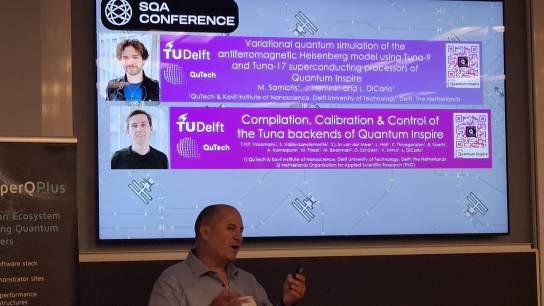
Presentation by Leo DiCarlo (TU Delft)
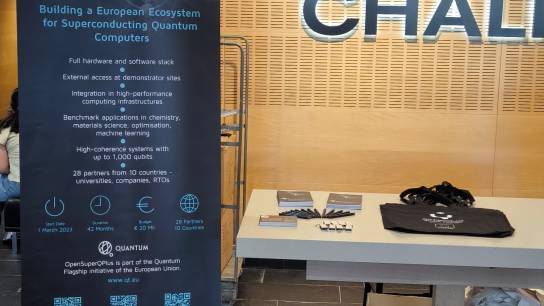
OpenSuperQPlus booth at the SQA Conference (1)
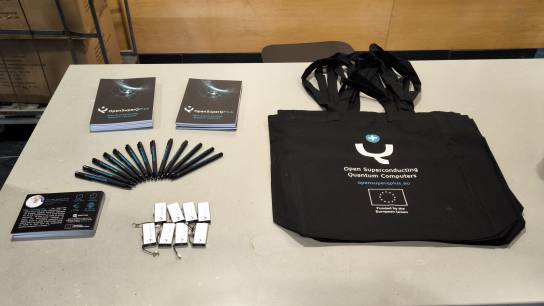
OpenSuperQPlus booth at the SQA Conference (2)